Mission
Design and build a lightweight aerial seeding payload for Stinson Aerial Services that could be mounted beneath a heavy-lift UAV and dispense seed during flight.
Design Challenge
The tank needed to hold and dispense seed reliably while staying lightweight enough for drone integration. It also needed to be serviceable, manufacturable, sealed against leakage, and robust enough for field testing.
Approach
The project originated after meeting Stinson Aerial Services, a startup in Courtenay, BC, at a UBC hiring fair. The company wanted to support agricultural, land-management, and reforestation workflows by aerially seeding large areas of land and reducing manual seeding labor.
Worked with another UBC Mechanical Engineering student through iterative CAD design, client design reviews, and collaboration with campus machine shops. Developed a modular polycarbonate tank using sealed plates, removable access hardware, a side fill door, and a motor-driven dispensing shaft.
Key Engineering Decisions
- Used polycarbonate plates to reduce weight while maintaining structural rigidity.
- Sealed the tank using silicone between plate interfaces.
- Added draw latches so the top plate could be removed for cleaning, filling access, and maintenance.
- Added a side fill door for seed loading.
- Integrated a DC motor-driven shaft connected to an impeller for controlled circular seed distribution during flight.
- Designed the tank around the geometry, payload limits, and mounting constraints of the client's heavy-lift UAV.
- Reduced overall tank weight by approximately 25% through material selection and iterative redesign while maintaining required payload functionality.
Outcome
Delivered a functional prototype to Stinson Aerial Services for planned flight testing and field evaluation in British Columbia. Through material selection and iterative tank redesign, the final prototype reduced overall tank weight by approximately 25% compared to the earlier concept while maintaining seed capacity, structural performance, and serviceability.
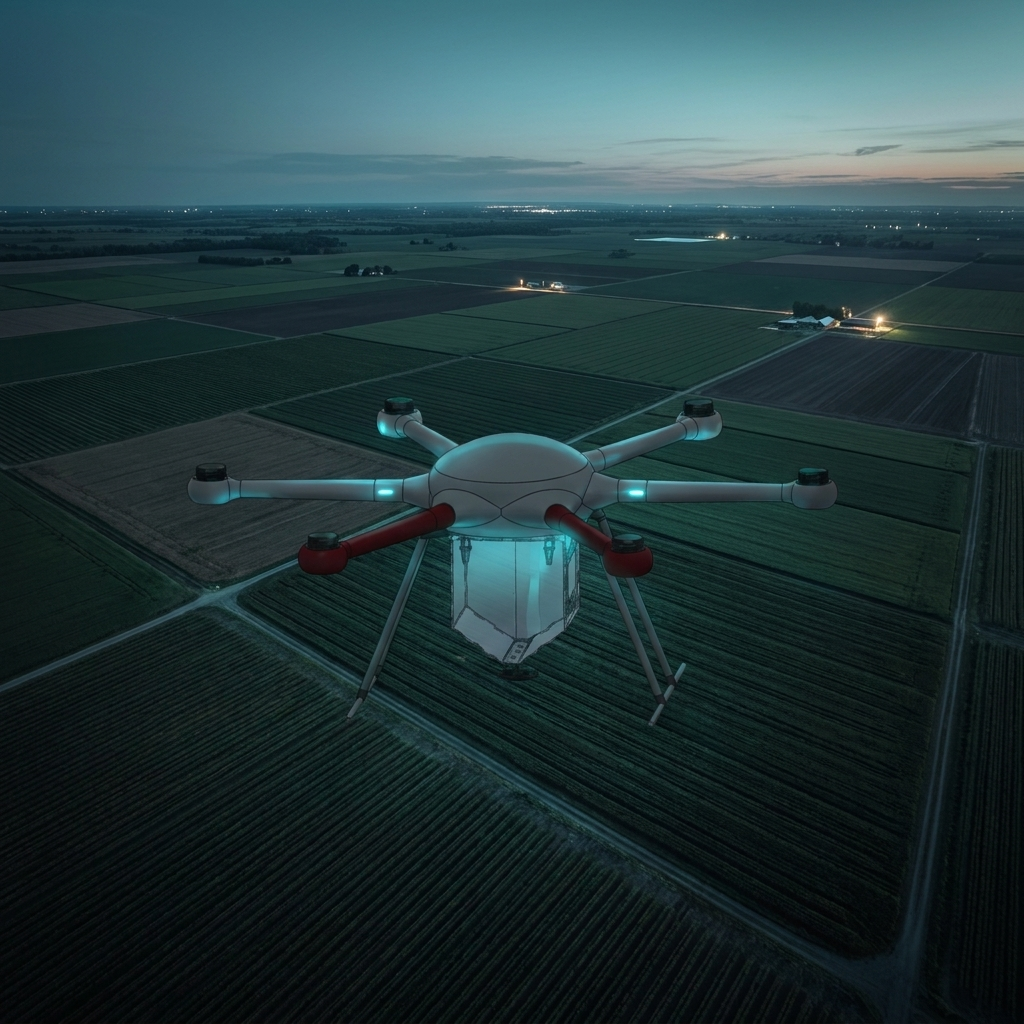
System Design
System layout showing how the tank mounted beneath the heavy-lift UAV and how seed moved from onboard storage through the tank toward the dispensing mechanism.
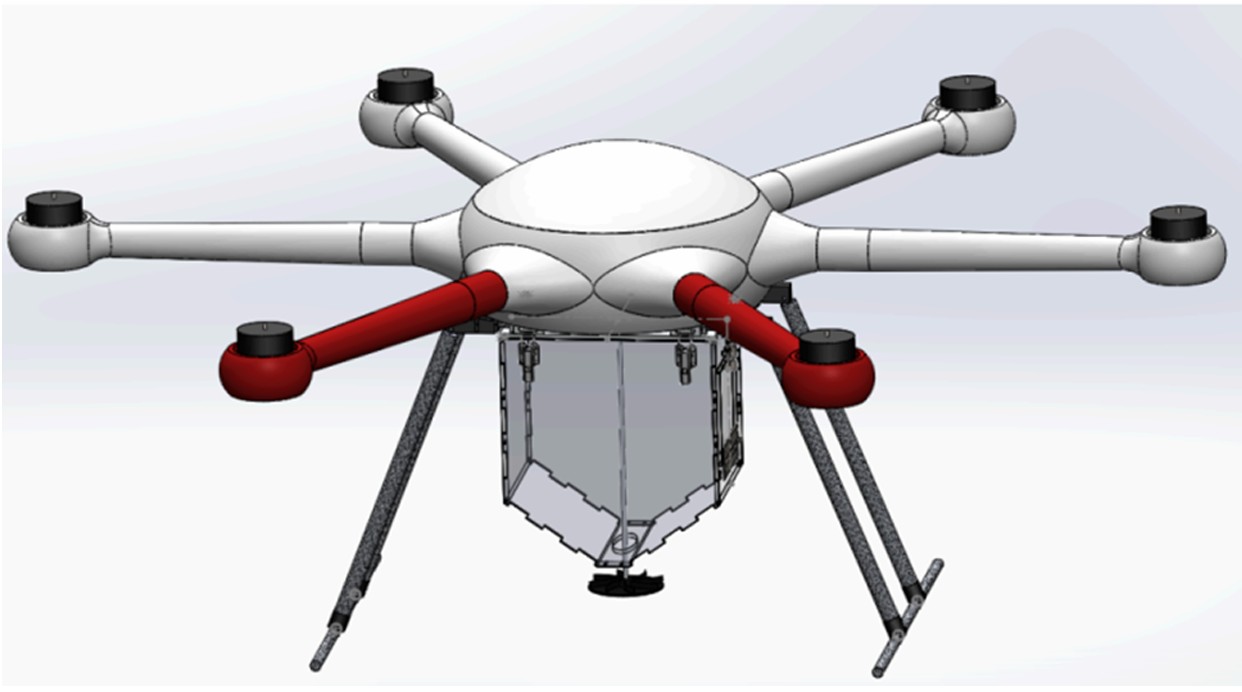
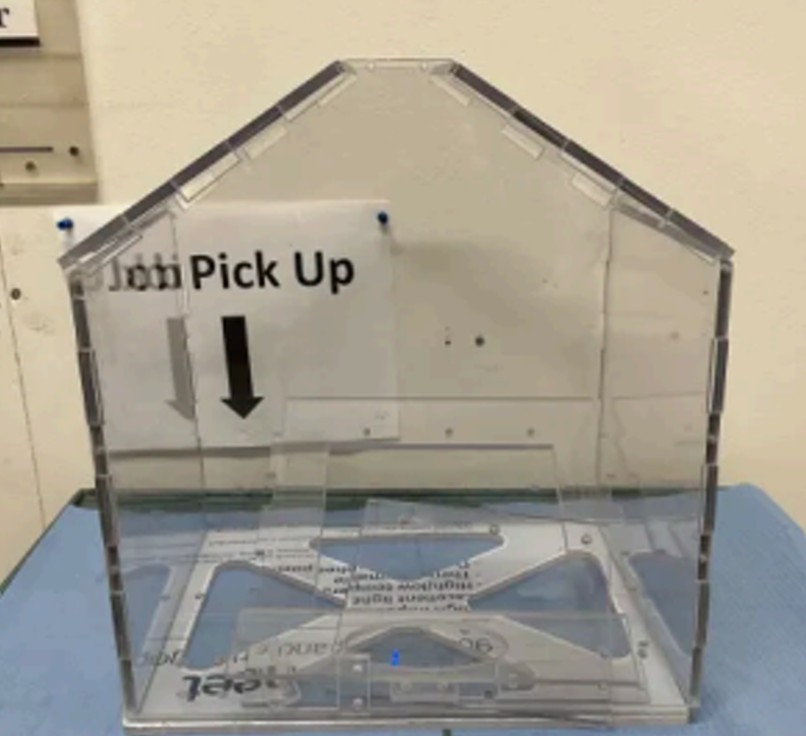
Manufactured Prototype
Functional prototype built from eight polycarbonate plates sealed with silicone, with draw latches allowing the top plate to be removed for cleaning, filling access, and maintenance.
Seed Trajectory & Field Coverage Modeling
Our team used Python-based trajectory modeling to estimate how seeds would travel after release from the UAV payload. The model helped evaluate release height, seed exit velocity, drag effects, and impeller-driven launch behavior to support dispensing decisions for the client's target seeding density of approximately 10 seeds per square foot.

Preliminary seed trajectory model estimating the drop path of seeds released from the UAV payload. The simulation helped the team evaluate how flight height and release conditions could influence horizontal seed travel distance and support dispensing decisions aimed at achieving the client's target seeding density.
Preliminary model based on assumed seed geometry, mass, release speed, and drag parameters.